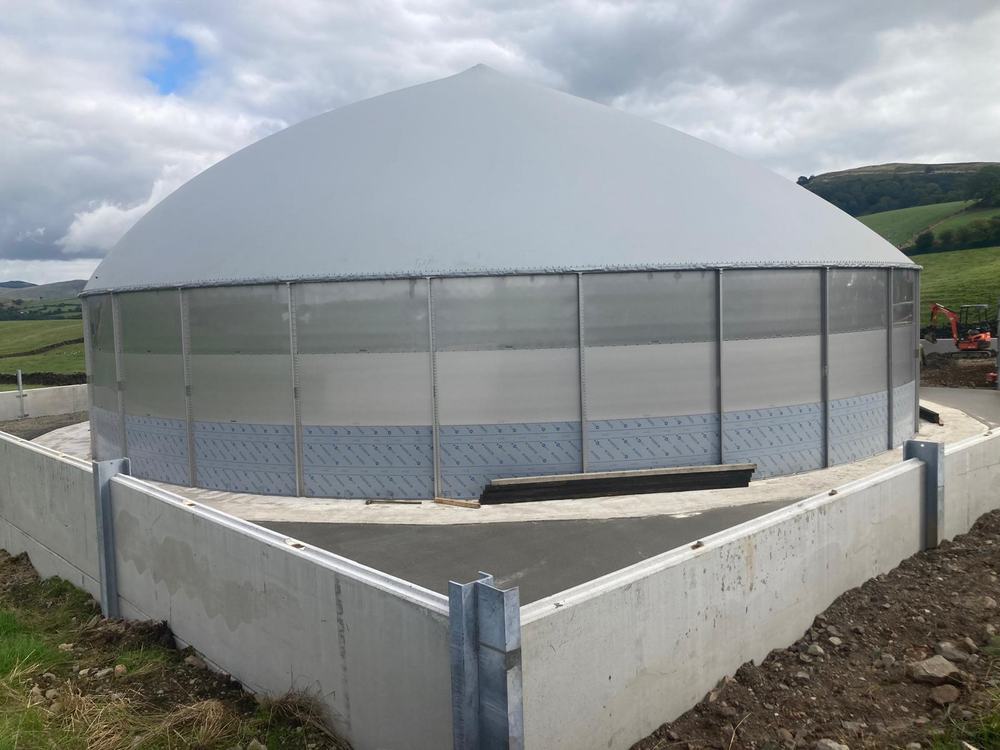
Digestate
What Is Digestate?
Digestate is what's left after slurry passes through a digester — still nutrient-rich, still needing storage, and usable as fertiliser where the rules are met.
6 min readRead Guide

It's a simple question with a genuinely useful answer. Here's what happens to slurry, step by step, once it enters a digester.
6 min read · Reviewed September 2026
Quick Answer
During anaerobic digestion, cattle slurry is held in controlled oxygen-free conditions where microorganisms break down part of its biodegradable organic matter. This produces biogas containing methane. Most of the liquid and mineral nutrients remain, leaving the plant as digestate.
Key Points
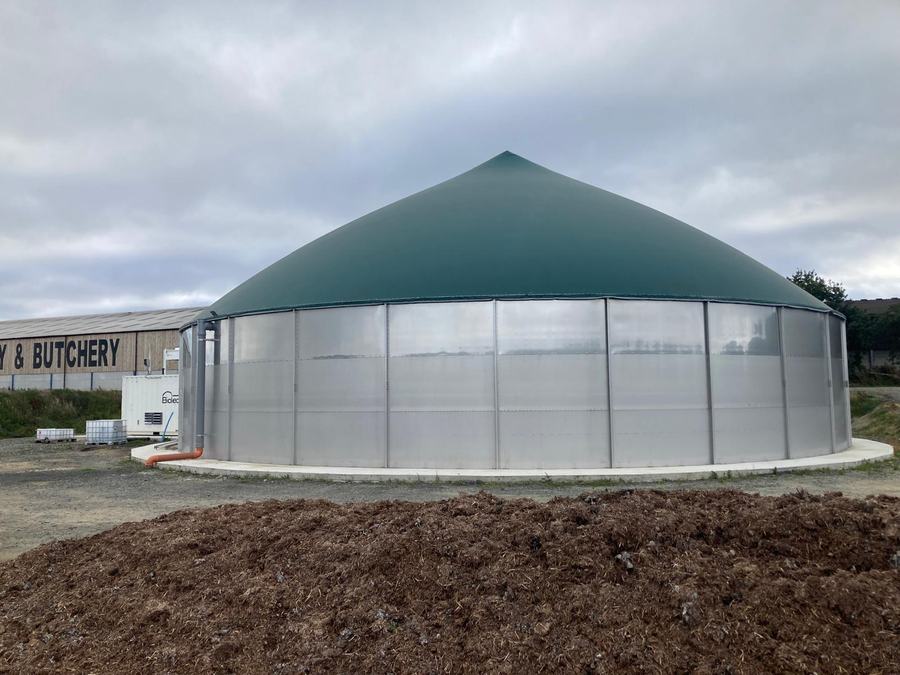
The process starts in the livestock buildings, with scrapers, channels, pits or pumps depending on the farm. Slurry may then enter a reception or mixing tank before being pumped into the digester — a consistent feed can help stable operation, and some installations use a pre-mixer to produce a more even feedstock before it enters the digester, as at the Rosconnor Dairies installation in one published Biolectric case study.
Inside the digester, oxygen is excluded. Different communities of microorganisms progressively break down biodegradable material, with the final stages generating methane-rich biogas. Rather than allowing that methane to escape uncontrolled, it's collected and used as fuel — on farm systems, typically powering CHP equipment.
The slurry doesn't vanish — the remaining material becomes digestate and retains agriculturally useful nutrients. AD is generally understood to improve the capture and treatment of nutrients and greenhouse gas emissions from animal slurry and manure, compared with direct spreading of untreated material.
It can. AFBI reports that AD can substantially reduce odour from farm slurry, although actual performance varies with system and management — this shouldn't be read as a promise of a specific percentage reduction for every farm, since it depends on the whole system, not the digester alone.
Sources
What Is Digestate?
Digestate is what's left after slurry passes through a digester — still nutrient-rich, still needing storage, and usable as fertiliser where the rules are met.
Nitrogen in Slurry During AD
AD doesn't remove most of slurry's nitrogen — it converts some of it into a form crops can use more readily, which changes how it needs to be managed.
Does AD Reduce Slurry Smell?
Digestion changes slurry's chemistry in ways that can reduce its odour, but that's a different question from whether an AD site itself smells — see both.
Does AD Smell?
AD can substantially reduce slurry odour, but a farm AD site isn't odour-free — feedstock handling, storage and transfers all still need managing.
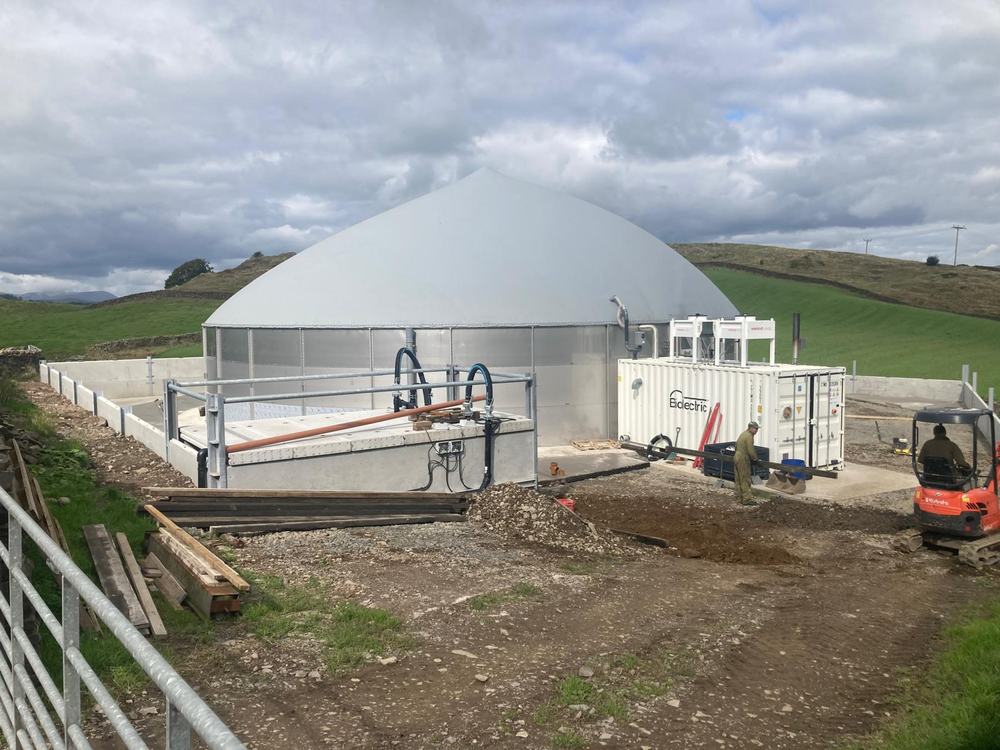
Charlie Bell Building supports farm-scale anaerobic digestion installations from site preparation and groundworks through to equipment installation and commissioning support.