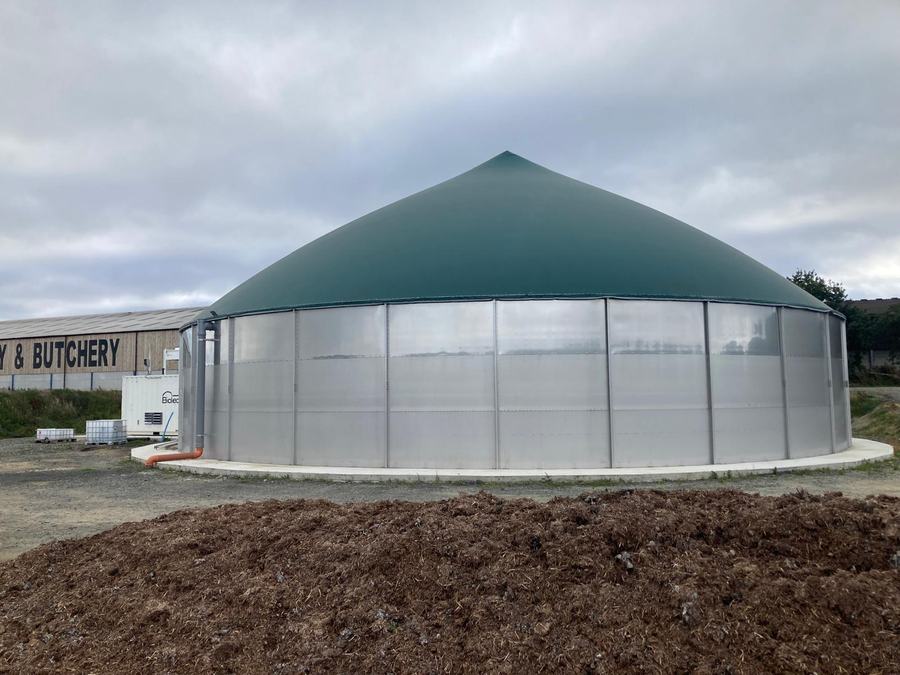
Dairy & Slurry
What Happens to Slurry in AD?
Follow cattle slurry from the yard through the digester to biogas and digestate, and see where odour actually changes along the way.
6 min readRead Guide

AD changes slurry's odour profile, but 'reduces' isn't the same as 'eliminates'. Here's where odour on an AD site actually comes from.
5 min read · Reviewed September 2026
Quick Answer
A properly designed and managed anaerobic digester is a contained process, but a farm AD site can still have odour sources associated with slurry handling, feedstock storage, digestate storage and transfers. Anaerobic digestion can reduce the odour of livestock slurry, but it should not be marketed as making slurry completely odour-free.
Key Points
Slurry contains organic material that continues to break down during storage, and that biological activity can produce odorous compounds — traditional slurry storage already has an odour profile before AD is introduced at all.
Inside the digester, biodegradable material is deliberately broken down under controlled oxygen-free conditions. AFBI reports that AD can substantially reduce slurry odour as part of the digestion process. The sensible way to put it is that AD can reduce slurry odour, but the complete farm system still needs good feedstock and digestate management — universal percentage reduction claims shouldn't be relied on.
Potential sources include slurry reception, uncovered feedstock, transfers, tanks, digestate storage, leaks, maintenance activities and abnormal plant operation — this is why site design matters as much as the digestion process itself.
Digestate can still have an odour — it isn't correct to describe it as odourless. Digestion changes the material and can reduce some of the compounds responsible for the characteristic smell of untreated slurry, but it doesn't remove odour entirely.
Odour control isn't solely a digester issue. In England, Environment Agency requirements for certain permitted AD facilities include covered digestate storage and measures to minimise fugitive emissions such as odours, and specifically identify sensitive receptors as considerations when selecting and designing permitted biological treatment sites; Scotland regulates this separately through SEPA. Where an installation is close to houses or other sensitive receptors, potential odour should be considered during site selection — plant position should be chosen as part of the wider farm layout, not simply because there happens to be an empty area.
Sources
What Happens to Slurry in AD?
Follow cattle slurry from the yard through the digester to biogas and digestate, and see where odour actually changes along the way.
What Is Digestate?
Digestate is what's left after slurry passes through a digester — still nutrient-rich, still needing storage, and usable as fertiliser where the rules are met.
Does AD Reduce Slurry Smell?
Digestion changes slurry's chemistry in ways that can reduce its odour, but that's a different question from whether an AD site itself smells — see both.
Is AD Worth It for a Dairy Farm?
AD can make sense for dairy farms with reliable slurry, sustained energy demand and a suitable site — but there's no universal return. Here's what actually drives it.
Charlie Bell Building supports farm-scale anaerobic digestion installations from site preparation and groundworks through to equipment installation and commissioning support.