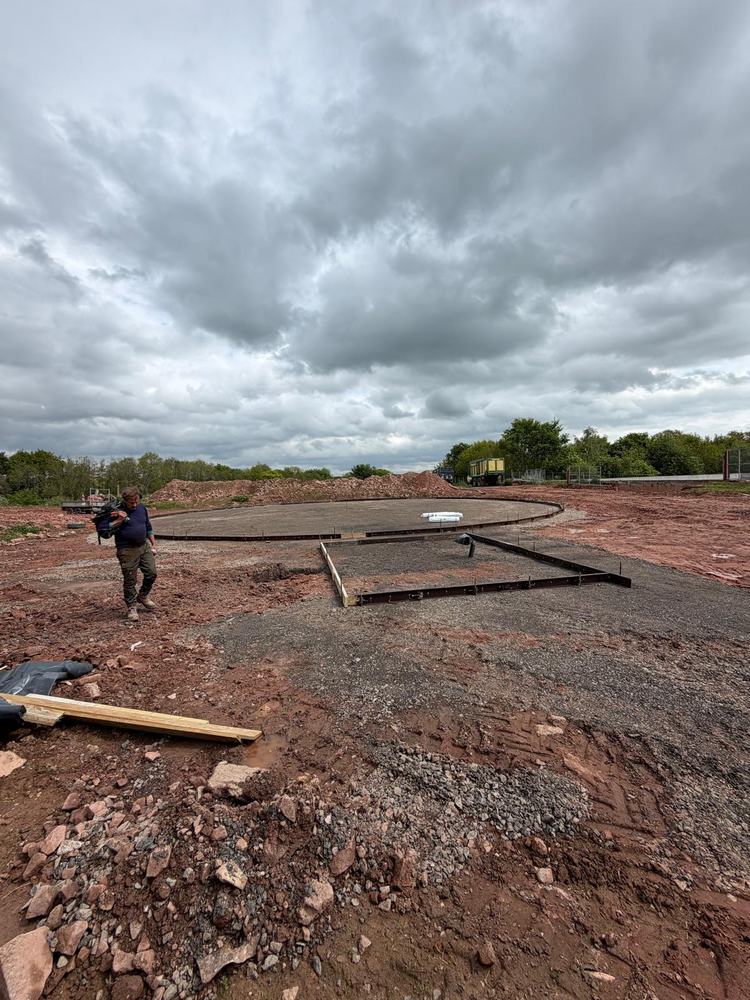
Installation
What Happens in an AD Site Survey?
A proper site survey looks past the farm plan — slopes, buried services, existing concrete and livestock movements all shape a workable AD layout.
5 min readRead Guide

The nearest empty space isn't necessarily the right one. Here's why AD site layout deserves the same attention as the plant itself.
6 min read · Reviewed September 2026
Quick Answer
The location of an AD plant affects almost every part of the installation. Distance from slurry, ground levels, digestate storage, electricity, access, drainage, neighbouring properties and future farm development all influence the best position. A good layout can simplify construction and operation, while a poor layout can create unnecessary pumping, pipework and maintenance problems for years.
Key Points
Because 'empty' doesn't mean 'suitable'. A location may look convenient but create long slurry pipe runs, difficult electrical connections, poor vehicle access or drainage problems — the layout needs to be considered as a system, not picked on convenience alone.
For slurry-fed AD, reducing unnecessary transfer distance can simplify pumping, pipework, energy consumption and construction — though this doesn't mean the digester must always sit immediately beside the cattle housing, just that routing should be considered early. Ground levels influence excavation, tanks, pipework, drainage and pumping, so understanding them before finalising the layout can avoid unnecessary civil work. The outlet side matters just as much: where will digestate go, how far does it need to travel, and is existing storage suitable?
Where the plant connects into the farm's electrical system, and how generated electricity will be used, affects cable routing and cost — long or complicated cable runs add expense. Construction access needs large delivery vehicles, concrete wagons, excavators and lifting equipment to physically reach the site, while everyday access afterwards shouldn't unnecessarily obstruct tractors, feed deliveries, milk collection or livestock movements.
The layout needs to leave enough room to access pumps, open panels, remove equipment, inspect tanks and use lifting equipment where required. Site location should also consider water, drainage and potential environmental receptors — in England, Environment Agency guidance for permitted biological treatment facilities requires consideration of sensitive receptors, fugitive emissions, flood risk and other environmental factors when choosing and designing sites; Scotland's equivalent regulator is SEPA.
Worth asking before finalising a layout: will the herd grow, will new sheds be built, will slurry storage change, could additional renewable generation be installed, and will roads change? An AD installation is long-lived infrastructure — it shouldn't unnecessarily block the farm's next development.
A well-planned layout aims to reduce unnecessary distance, excavation, pumping, pipework, cabling and interference, while preserving access, safety, maintainability and future flexibility. The objective isn't simply to install the AD equipment — it's to make the equipment fit sensibly into a working farm.
Sources
What Happens in an AD Site Survey?
A proper site survey looks past the farm plan — slopes, buried services, existing concrete and livestock movements all shape a workable AD layout.
How Much Space Does AD Need?
There's no universal footprint — the digester itself is only part of the space needed once tanks, CHP, access and maintenance room are all accounted for.
What Groundworks Does AD Need?
Almost everything else in an AD installation depends on the groundworks being right — levels, foundations, drainage, service routes and future maintenance access.
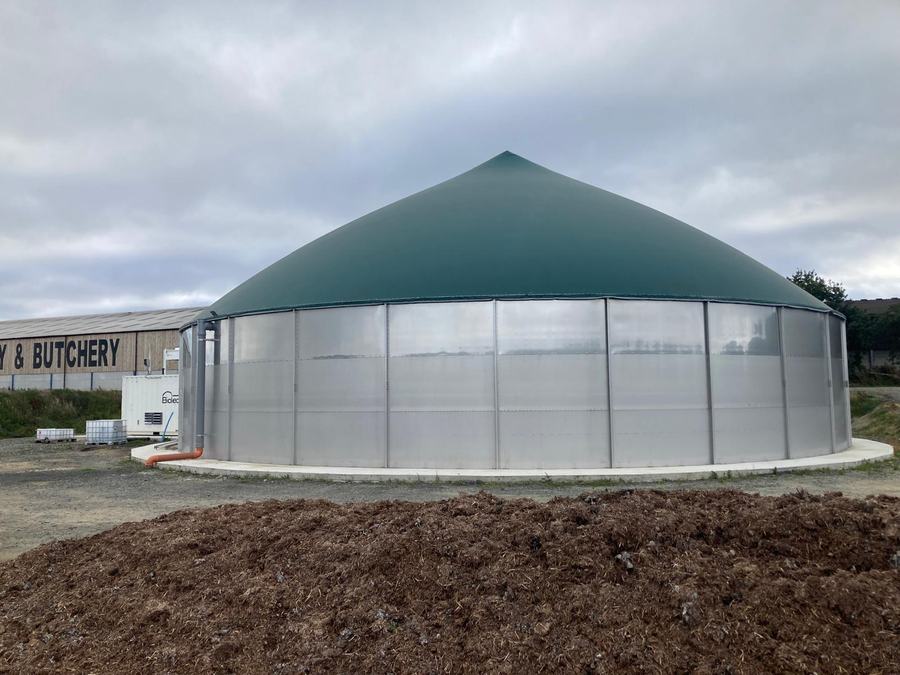
Retrofitting AD Onto a Dairy Farm
Adding AD to a working dairy farm is possible, but the plant has to integrate with slurry collection, tanks, buildings, roads and daily operation as they already exist.
Charlie Bell Building supports farm-scale anaerobic digestion installations from site preparation and groundworks through to equipment installation and commissioning support.