Installation
What Does AD Installation Involve?
Installing an AD plant involves far more than delivering the digester — from site assessment and agreed scope through groundworks, connections, testing and commissioning.
10 min readRead Guide

Groundworks rarely feature in photos of a finished digester, but they're foundational — literally. Here's what's actually involved before any plant equipment goes in.
9 min read · Reviewed September 2026
Quick Answer
Groundworks for a farm anaerobic digestion plant can include site preparation, excavation, sub-base construction, concrete foundations, tank excavations, drainage, trenches, pipe routes, electrical ducts and access. The exact requirements depend on the plant, ground conditions and existing farm infrastructure. Good groundworks are fundamental, because the equipment installed later depends on accurate levels, suitable foundations and properly planned service routes.
Key Points
Because almost everything else depends on them. A sophisticated AD unit can't compensate for incorrect levels, unsuitable foundations, badly positioned trenches, poor drainage, inaccessible equipment or incorrectly located tanks. Groundworks establish the physical framework the plant is installed into — getting them right makes later work easier, and getting them wrong can create expensive rework.
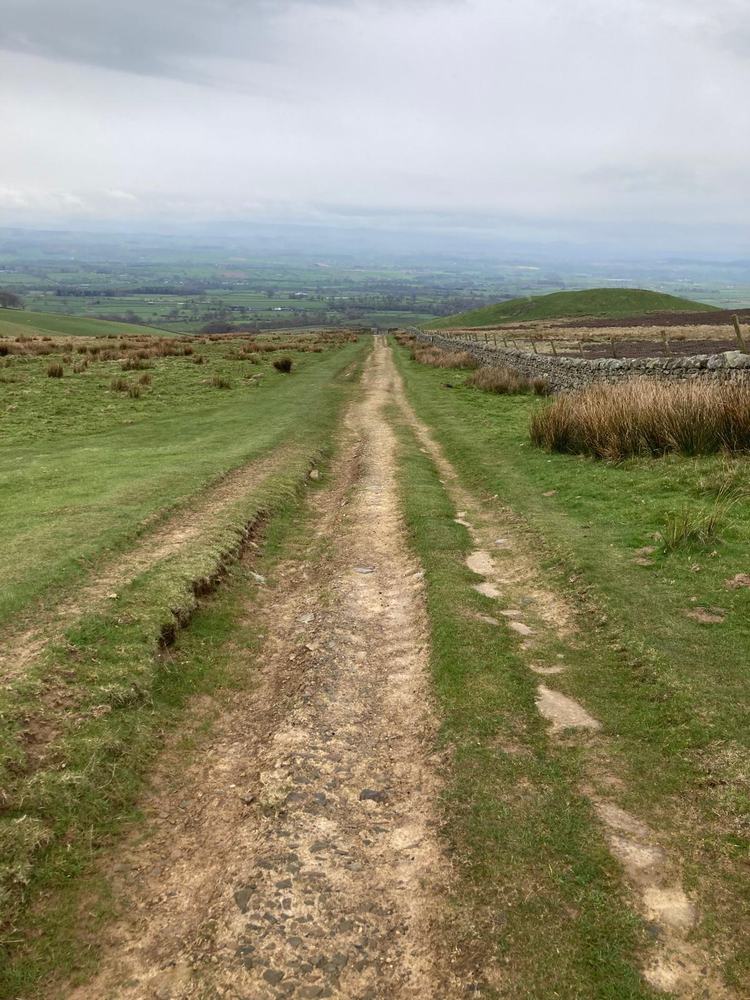
Before excavation starts, the proposed installation area needs to be properly understood — dimensions, levels, slopes, ground conditions, existing buildings, roads, slurry stores, drainage, known underground and overhead services, and access. This is also the point to consider how construction itself will happen: can an excavator reach the site, can concrete wagons reach the pour, and can the AD equipment be delivered and lifted into position?
Once the design is sufficiently developed, the installation needs to be set out accurately — the position of foundations, tanks, equipment, trenches, service entries and pipe routes. Small errors at this stage can become much larger problems later: a pipe penetration several hundred millimetres from its intended position may not become obvious until expensive equipment arrives.
The area may need topsoil stripping, vegetation removal, excavation, unsuitable material removal and levelling — the extent depends heavily on the existing site, since a level hardstanding presents a very different job from a sloping greenfield area.
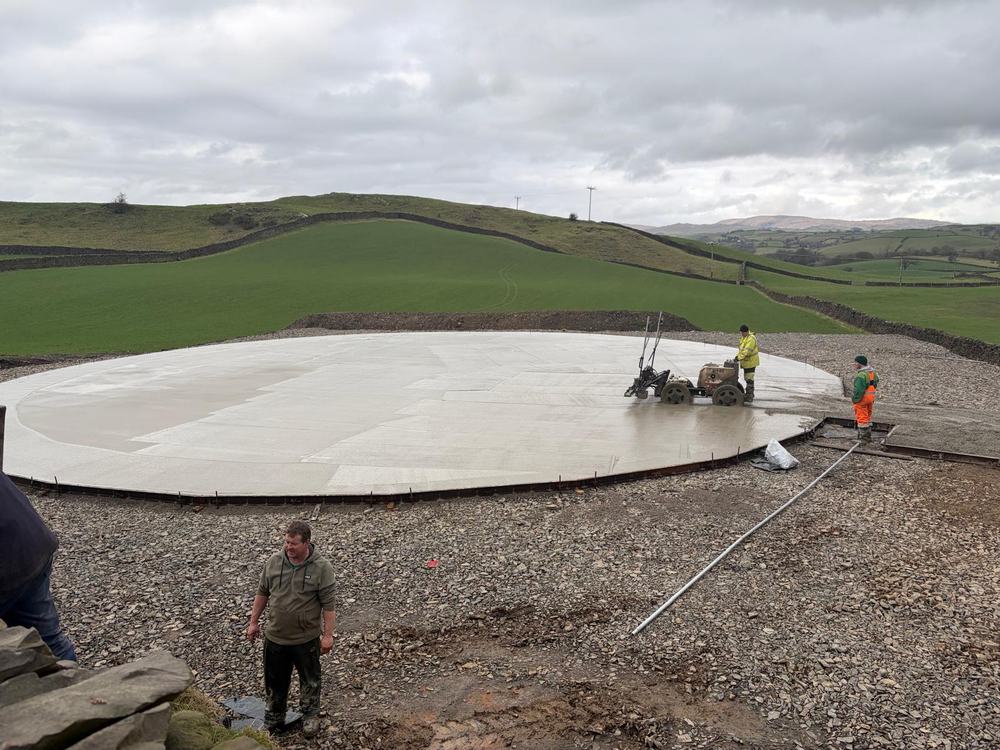
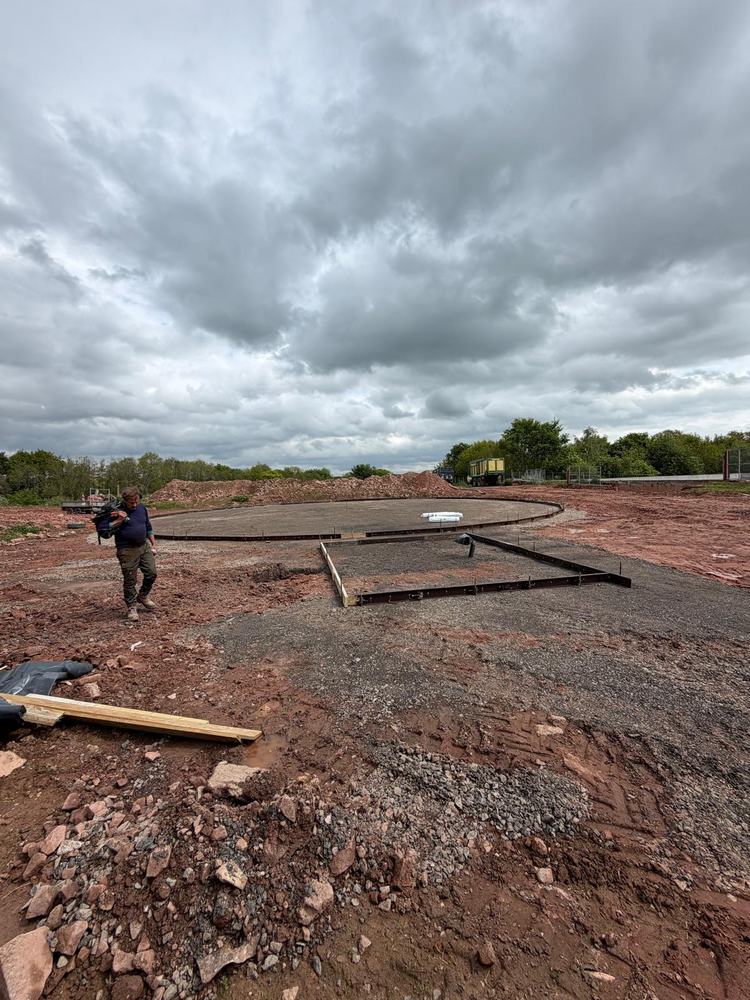
Concrete structures then need suitable support beneath them: excavation to formation level, suitable stone, compaction and level control. CBB's farm projects typically require careful preparation of the plant area before the main installation begins, though the exact specification needs to come from the appropriate engineering design for that site rather than a generic figure.
Concrete may support the digester, tanks, pumps, separators and other ancillary equipment, and needs to account for equipment loads, dimensions, ground conditions, reinforcement, levels, drainage, fixings and penetrations — slab thicknesses and specifications need to be project-specific rather than generic.
Farm AD systems can also involve several tanks or below-ground structures — reception, slurry transfer, digestate and other associated infrastructure — with excavation that may involve significant depth and needs appropriate consideration of stability, groundwater, construction method and safe access.
Trenches are often needed for multiple services at once — slurry pipework, digestate pipework, water, electrical cables, control cables and ducts — and planning these together can avoid repeatedly excavating the same area.
Pipework shouldn't simply follow the shortest line on a drawing: pumping distance, elevation, bends, access, isolation valves, future maintenance, crossings, protection and drainage all matter, and the physical farm needs to remain usable after installation — a route that interferes with tractors or future building access may be a poor long-term choice even if it saves a few metres of pipe. Providing suitable electrical ducts while trenches are already open, rather than digging them again later, is one of the more straightforward ways to save cost and disruption — which is why coordination between mechanical installation and electrical specialists matters early in the project.
Drainage deserves deliberate consideration on any AD site, since it handles liquids and needs to operate in all weather. Depending on the installation and the regulatory regime that applies, requirements may cover impermeable surfacing, sealed drainage, containment, tanks, lagoons and inspection.
In England, Environment Agency standard rules for certain on-farm AD facilities include requirements for impermeable surfaces with sealed drainage, appropriately designed storage and infrastructure inspection — Scotland regulates this separately through SEPA. Not every project falls under the same permitting regime, so these shouldn't be read as a universal construction specification — the relevant requirements need to be confirmed for the specific installation and jurisdiction.
The route between the cattle or slurry system and the digester is particularly important — the installation may involve existing pits, new tanks, pumps and underground pipework, and reducing unnecessary transfer distance can simplify the whole system. At Jenkin Cragg Farm, covered by Farmers Weekly in March 2026, the AD plant was positioned to make use of slurry from a herd of 550 cows feeding roughly 70% of it into the system — a good example of site layout genuinely influencing the engineering.
What leaves the digester needs a route and destination too. The project needs to consider digestate transfer, storage, separation where applicable, and access for subsequent management — it's a mistake to design only the inlet side of an AD plant.
AD projects often take place in the middle of working farms, so the construction plan needs to coexist with milk collection, feed deliveries, slurry movements, livestock, farm machinery, staff and contractors — access planning is part of installation engineering, not an afterthought.
It's just as easy to optimise everything for installation day and forget that the plant may operate for many years. Eventually someone will need to remove a pump, service a mixer, open a valve, inspect a tank or replace equipment — if it's boxed in by later construction, maintenance becomes unnecessarily difficult. The right question to ask during layout is simple: if this pump has to come out in five years, can someone actually get it out?
Once buried services are complete, areas may need to be backfilled, compacted, resurfaced, graded and drained. The finished site needs to function as part of the working farm, not merely look complete on commissioning day.
Groundworks are one of the areas where Charlie Bell Building takes a flexible approach — depending on the project, CBB may undertake or coordinate site preparation, excavation, concrete preparation, tank construction, trenches, pipework routes and equipment installation. Where a farmer has their own machinery or trusted groundwork contractor, the scope can instead be divided accordingly — what matters most is that everyone is working from the same installation requirements.
Sources
What Does AD Installation Involve?
Installing an AD plant involves far more than delivering the digester — from site assessment and agreed scope through groundworks, connections, testing and commissioning.
How Long Does AD Installation Take?
Plant erection and total project duration aren't the same thing. Here's the general sequence a farm AD build moves through, and what actually drives the timeline.
Do You Still Need Slurry Storage?
Yes — AD changes the material but doesn't remove the need for storage, before digestion, after it, or both, depending on the system and farm.
Retrofitting AD Onto a Dairy Farm
Adding AD to a working dairy farm is possible, but the plant has to integrate with slurry collection, tanks, buildings, roads and daily operation as they already exist.
Charlie Bell Building supports farm-scale anaerobic digestion installations from site preparation and groundworks through to equipment installation and commissioning support.