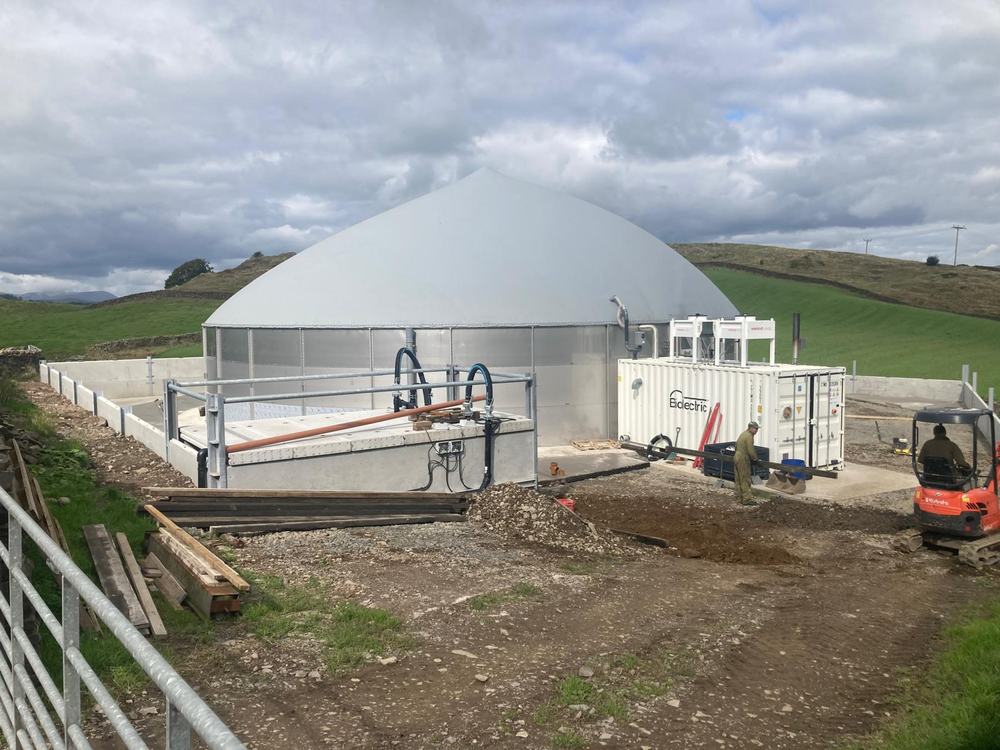
Farm Energy
How Much Electricity Does AD Generate?
Output depends on feedstock, methane content, CHP efficiency and how the plant is run — not a fixed per-cow figure. Here's what actually determines it.
8 min readRead Guide

Yes — but the size of the saving varies a lot by farm. Here's what actually determines it, with two documented UK examples.
7 min read · Reviewed September 2026
Quick Answer
Yes. Electricity generated from farm biogas can reduce the amount a dairy farm purchases from the grid. The actual saving depends on generation, farm consumption, timing, plant availability, electricity tariffs and how much power is used on site rather than exported.
Key Points
Dairy operations can consume electricity continuously — milk cooling, robotic milking, vacuum pumps, water heating, refrigeration and slurry pumps all draw power around the clock. This can suit continuous AD generation particularly well.
At Alderstone Mains Farm in southeast Scotland, six robotic milkers create a continuous electricity requirement that its Biolectric AD plant was specifically chosen to help meet. Biolectric reports that Bays Leap Farm in Northumberland, an organic dairy farm with around 1,000 cows, cut its electricity bill by around 90% after installing its slurry-fed system. A separate Biolectric case study reports Rosconnor Dairies, a roughly 680-700 cow farm, reducing its electricity bill by around 96% with its 44kW installation, with the remaining share mainly attributed to the farmhouse not yet being connected to the system.
These are individual, manufacturer-published case studies and should be read as examples of what's possible under the right conditions, not a promise that another farm will achieve the same saving.
Generation (how much electricity the system actually produces), self-consumption (how much the farm can use directly), the electricity tariff being displaced, export value for any surplus, plant availability, and the plant's own parasitic load all combine to determine the real-world saving.
Before designing around a claimed output, it's worth gathering annual bills, half-hourly data where possible, day and night consumption, and seasonal demand. The best outcome isn't necessarily the biggest generator — it's often the system whose production most closely matches the farm's actual demand.
Sources
How Much Electricity Does AD Generate?
Output depends on feedstock, methane content, CHP efficiency and how the plant is run — not a fixed per-cow figure. Here's what actually determines it.
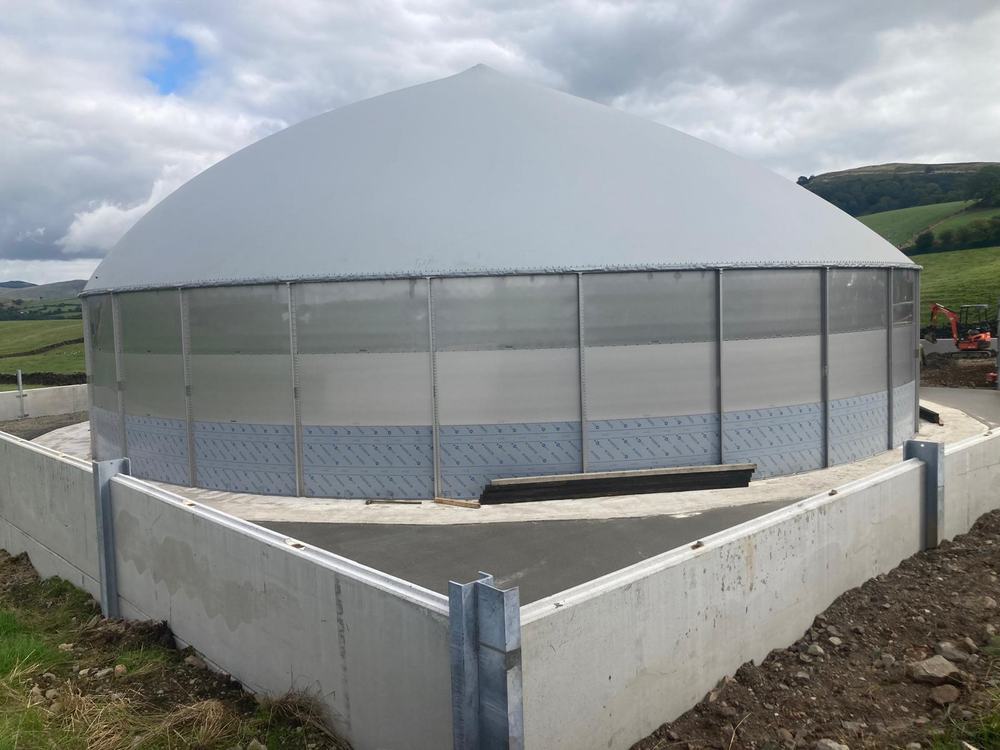
AD vs Solar for Dairy Farms
Solar depends on daylight; AD can generate continuously. For many dairy farms with round-the-clock demand, the two technologies end up complementing each other.
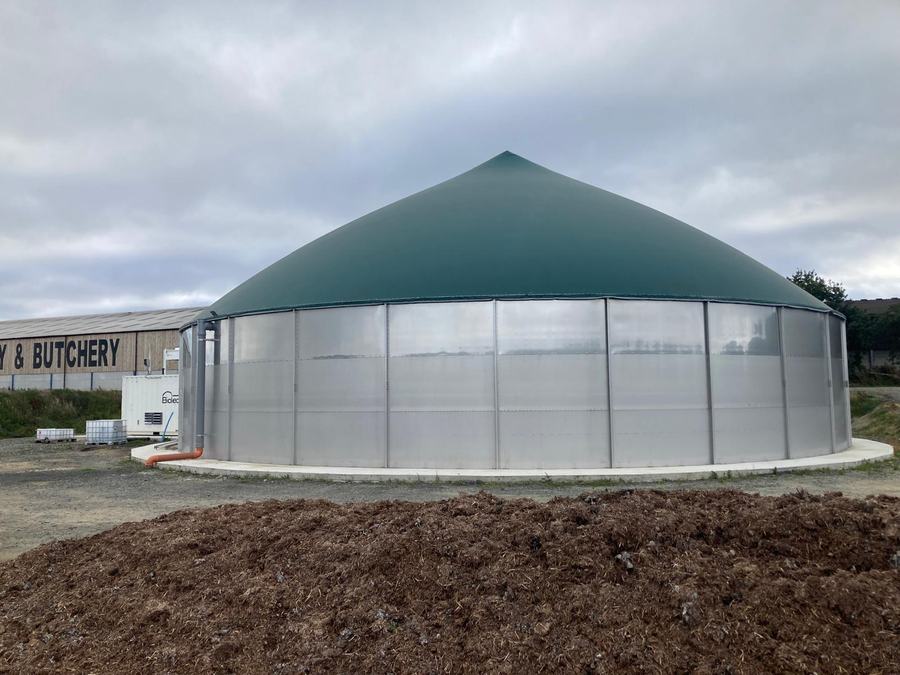
Is AD Worth It for a Dairy Farm?
AD can make sense for dairy farms with reliable slurry, sustained energy demand and a suitable site — but there's no universal return. Here's what actually drives it.
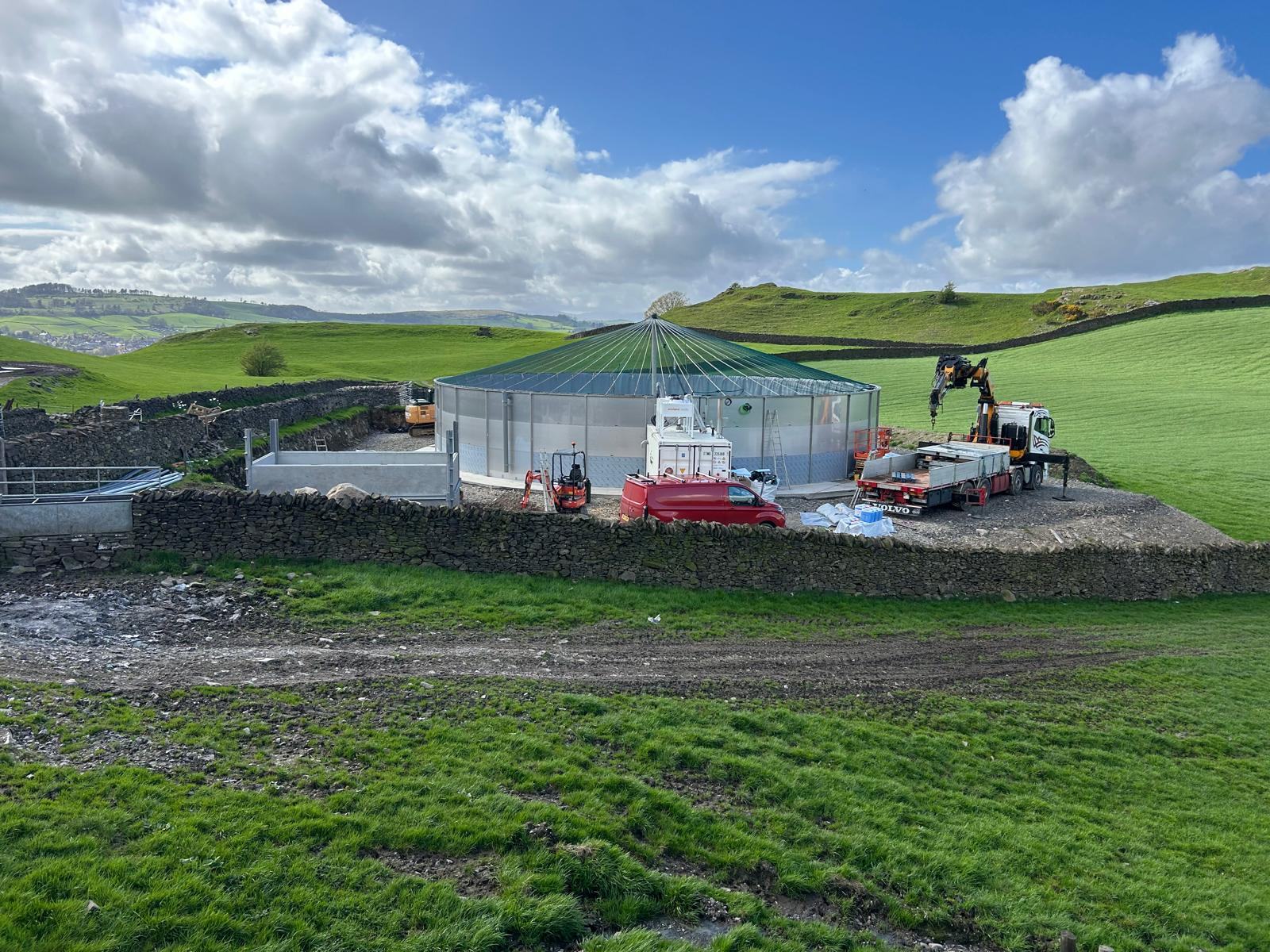
AD for Dairy Farms: Full Guide
A practical overview of dairy farm anaerobic digestion in the UK — slurry, plant size, electricity, digestate, costs, installation and farm suitability in one place.
Charlie Bell Building supports farm-scale anaerobic digestion installations from site preparation and groundworks through to equipment installation and commissioning support.