
Dairy & Slurry
What Can Go Into a Digester?
Slurry, manure and suitable plant material are the common farm feedstocks — but what a specific plant can accept depends on its design and the regulatory regime.
6 min readRead Guide

Energy yield is only one factor when choosing feedstock. Here's how slurry, manure and crops actually compare for a farm-scale digester.
6 min read · Reviewed September 2026
Quick Answer
Slurry, manure and suitable crops can all be used as anaerobic digestion feedstocks, but they behave differently. Slurry is readily pumpable but relatively dilute, while higher dry matter feedstocks may contain more biodegradable energy per tonne but require different handling equipment. Feedstock choice affects plant design, economics and regulation.
Key Points
Advantages can include being already produced on dairy farms, pumpable, and relatively continuous, without necessarily requiring dedicated cropping. Potential limitations include high water content, comparatively low energy concentration per tonne, and seasonal availability affected by dilution from wash water.
Manure may have a higher solids content than slurry, which changes feeding equipment, mixing and handling — a system intended only for pumpable slurry shouldn't automatically be assumed capable of handling solid manure without modification.
Crops can contain considerably more biodegradable material per tonne than dilute slurry. However, there are additional questions around land use, cultivation, harvesting, storage, feedstock cost and opportunity cost that slurry-only systems avoid.
There's no universal answer. For the farm-scale dairy systems Charlie Bell Building commonly supports, making use of existing slurry can be particularly attractive, because it integrates AD with an existing farm material stream rather than creating an entirely new feedstock enterprise.
Sources
What Can Go Into a Digester?
Slurry, manure and suitable plant material are the common farm feedstocks — but what a specific plant can accept depends on its design and the regulatory regime.
Can AD Run on Slurry Alone?
Yes — slurry-only AD is already operating on UK dairy farms. Here's what affects gas production, how slurry actually moves through the system, and what it needs to work well.

How Much Slurry Does a Cow Produce?
Generic litres-per-cow figures are a rough guide at best — wash water, housing and dilution change the picture. Here's what actually matters for AD sizing.
What Size Digester Do I Need?
Digester size can't be calculated from cow numbers alone — it depends on feedstock volume, dry matter, retention time and the farm's actual energy demand.
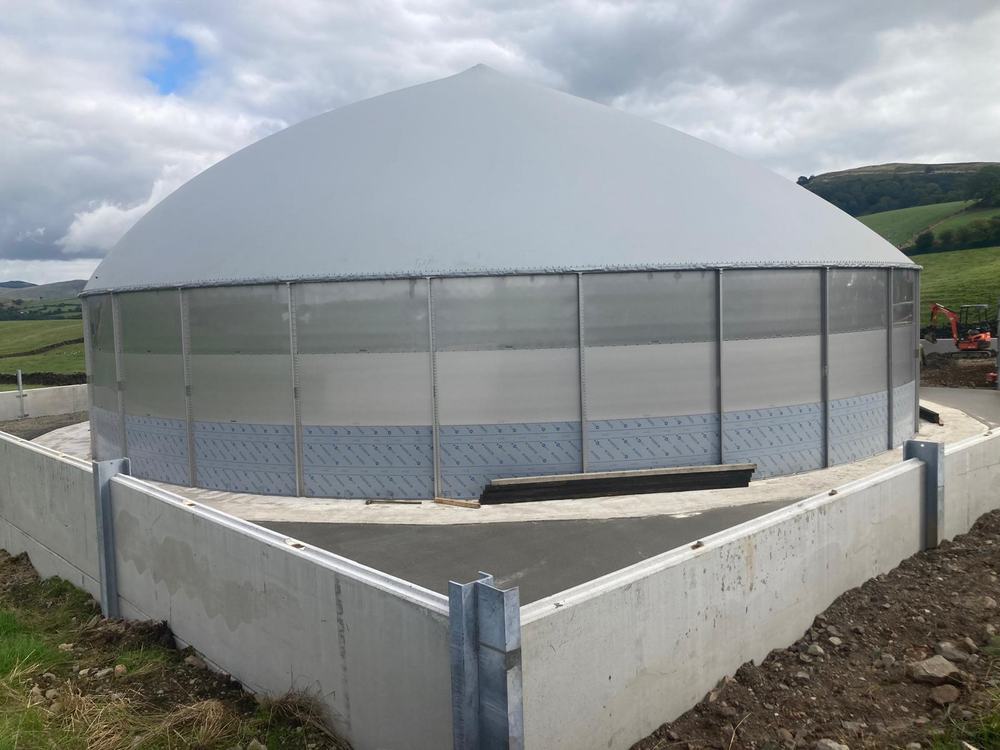
Charlie Bell Building supports farm-scale anaerobic digestion installations from site preparation and groundworks through to equipment installation and commissioning support.